💥 BREAKING: Bonnie Raitt SPARKS ONLINE FIRESTORM AFTER CONTROVERSIAL QUOTE GOES VIRAL — FANS DIVIDED NATIONWIDE
A viral social media post involving legendary singer-songwriter Bonnie Raitt has ignited a fierce online debate, drawing reactions from fans, critics, commentators, and music lovers across the country.
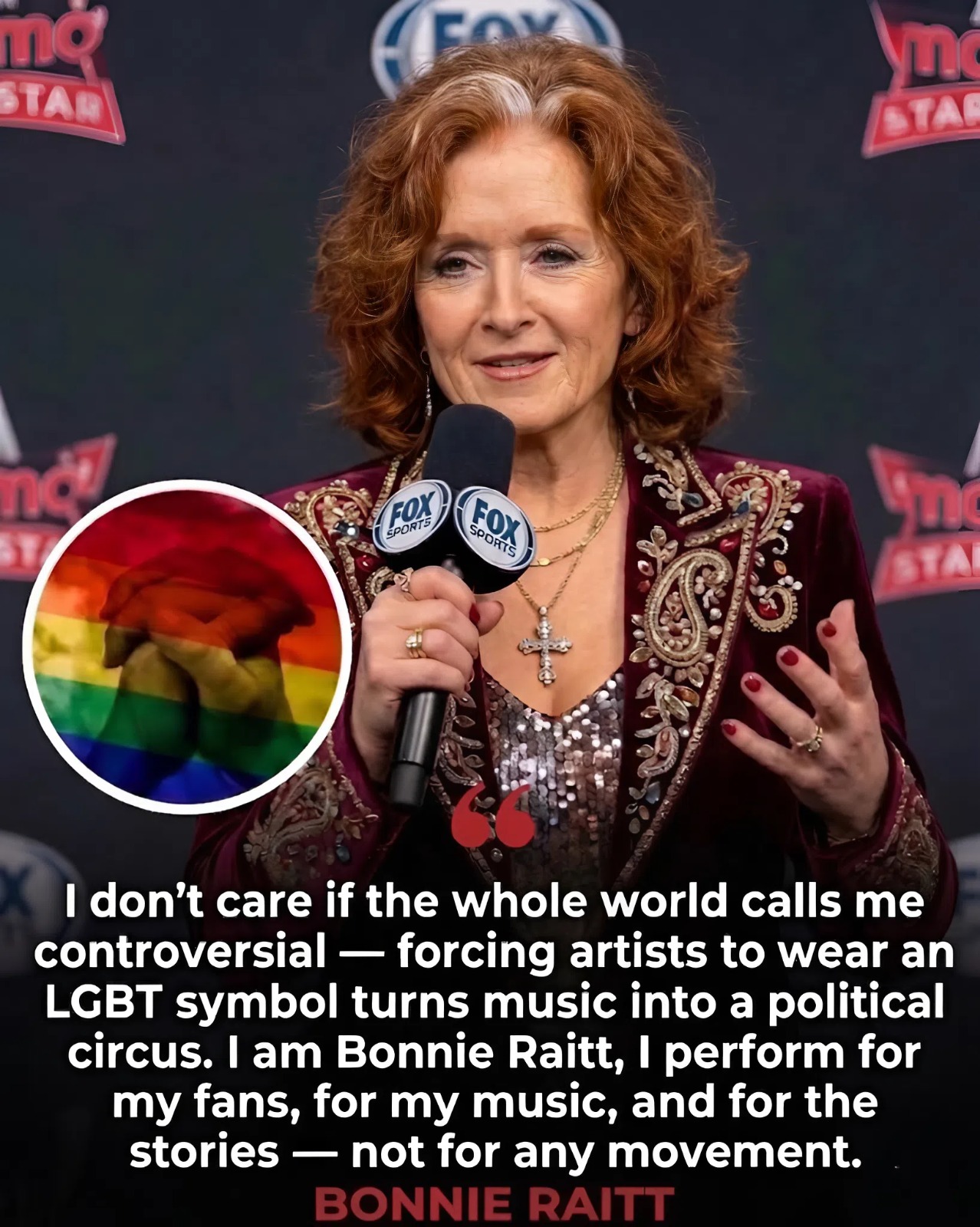
The controversy began when a quote allegedly attributed to Raitt started circulating on multiple social media platforms. According to the viral claim, the Grammy-winning artist criticized the use of mandatory LGBT symbols at public events, reportedly describing them as a “political charade.” The statement spread rapidly, generating thousands of comments, reposts, and heated discussions within hours.
Yet despite the intensity of the reaction, an important question remains unanswered: Did Bonnie Raitt actually say it?
As of now, no verified recording, interview transcript, official statement, or credible source has emerged confirming that Raitt made the remarks exactly as they appear in the viral posts. Nevertheless, the claim has continued to gain momentum online, demonstrating just how quickly information can travel—and how difficult it can be to separate fact from speculation in today’s digital landscape.
The situation has become a case study in the power of social media and the influence of celebrity culture.
For decades, Bonnie Raitt has been admired not only for her distinctive voice and musical achievements but also for her long history of social activism. Throughout her career, she has supported various humanitarian, environmental, and civil rights causes. Because of that public image, many fans were surprised when the alleged quote began making the rounds online.
Some immediately questioned its authenticity.

Others accepted it as genuine and rushed to either defend or criticize the singer based on what they believed she had said.
The result was a digital firestorm that quickly expanded beyond the original claim.
Supporters of the alleged statement argued that artists should have the freedom to focus on music without being expected to endorse specific political, cultural, or social movements. They suggested that entertainers often face pressure to publicly align themselves with causes and symbols that may not reflect their personal priorities.
Many online commenters framed the issue as one of artistic independence.
“Musicians should be allowed to perform for their fans without being forced into political messaging,” one social media user wrote.
Others echoed similar sentiments, arguing that audiences attend concerts to enjoy music and connect with artists rather than participate in broader cultural debates.
At the same time, critics of the alleged remarks voiced strong opposition.
They argued that symbols of inclusivity can play an important role in making marginalized communities feel seen, welcomed, and respected. Some suggested that dismissing such symbols—even hypothetically—could send the wrong message to fans who look to public figures for support and representation.
For many observers, however, the larger issue wasn’t the content of the alleged quote but the fact that it remains unverified.
Media analysts and digital literacy advocates pointed out that viral claims often gain traction long before evidence is examined. In many cases, public opinion begins forming immediately, while fact-checking efforts struggle to keep pace.
The Bonnie Raitt controversy appears to follow that familiar pattern.
Within hours of the post spreading, thousands of people were debating the singer’s supposed position despite the absence of any confirmed source.
Some users called for patience and verification.

Others argued that sharing unconfirmed statements can unfairly damage reputations and create unnecessary conflict.
“This is exactly why people need to check sources before reacting,” one commenter wrote. “A quote can go viral before anyone even knows if it’s real.”
The incident has also reignited a broader conversation about the role celebrities play in modern cultural discussions.
Should entertainers use their platforms to advocate for social causes?
Should fans expect public figures to take positions on controversial issues?
Or should musicians simply focus on their art and leave politics to others?
These questions have become increasingly common in recent years as social media blurs the boundaries between entertainment, activism, and public discourse.
For artists like Bonnie Raitt, the expectations can be particularly complicated.
Many fans admire celebrities not only for their talent but also for their values and public statements. At the same time, audiences often disagree sharply about which issues deserve attention and how public figures should express their views.
That tension helps explain why stories like this can spread so rapidly.
People are not merely reacting to a quote.
They are reacting to what the quote appears to represent.
In many ways, the discussion surrounding the alleged statement says as much about the current cultural climate as it does about Bonnie Raitt herself.
Across social media platforms, users have projected their own beliefs, frustrations, hopes, and concerns onto the controversy. Some see it as a defense of personal freedom. Others view it as a challenge to inclusivity. Still others see it as a warning about misinformation.
Meanwhile, Bonnie Raitt has not publicly confirmed the authenticity of the statement circulating online.
Without clear evidence, many observers caution against drawing conclusions.
Experts in media literacy note that fabricated quotes, misleading headlines, and out-of-context statements have become increasingly common in the era of viral content. A single post can reach millions of people before any meaningful verification occurs.
That reality presents challenges not only for celebrities but for the public as well.
Every viral controversy becomes a test of critical thinking.
Every trending headline raises questions about accuracy, context, and credibility.
And every online debate reminds us how quickly perception can shape reality.
Whether the quote attributed to Bonnie Raitt ultimately proves to be genuine, misleading, or entirely fabricated, the reaction it generated reveals something significant about contemporary culture.
People are eager to engage.

They are eager to defend their beliefs.
And they are eager to hold public figures accountable for statements—real or perceived.
As the conversation continues, one fact remains undeniable: a single unverified claim has succeeded in capturing national attention and fueling passionate discussion across the political, cultural, and entertainment landscape.
For now, the truth behind the viral quote remains uncertain.
But the controversy surrounding it has already demonstrated the extraordinary power of social media to amplify narratives, influence public opinion, and transform a simple post into a nationwide debate.
In the digital age, perception can travel faster than verification—and sometimes the conversation begins long before the facts arrive.