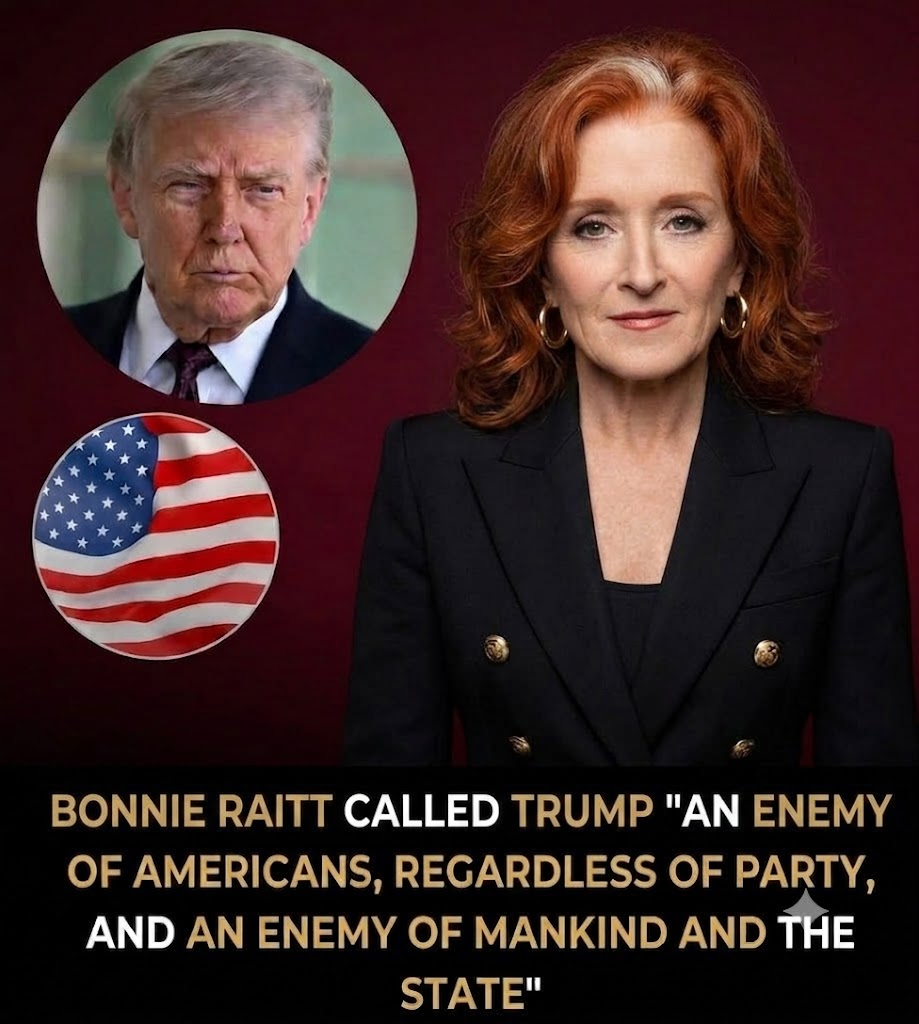
🎸🇺🇸 BONNIE RAITT’S COMMENTS SPARK NATIONAL DEBATE AS AMERICA CONTINUES TO WRESTLE WITH POLITICAL DIVISIONS
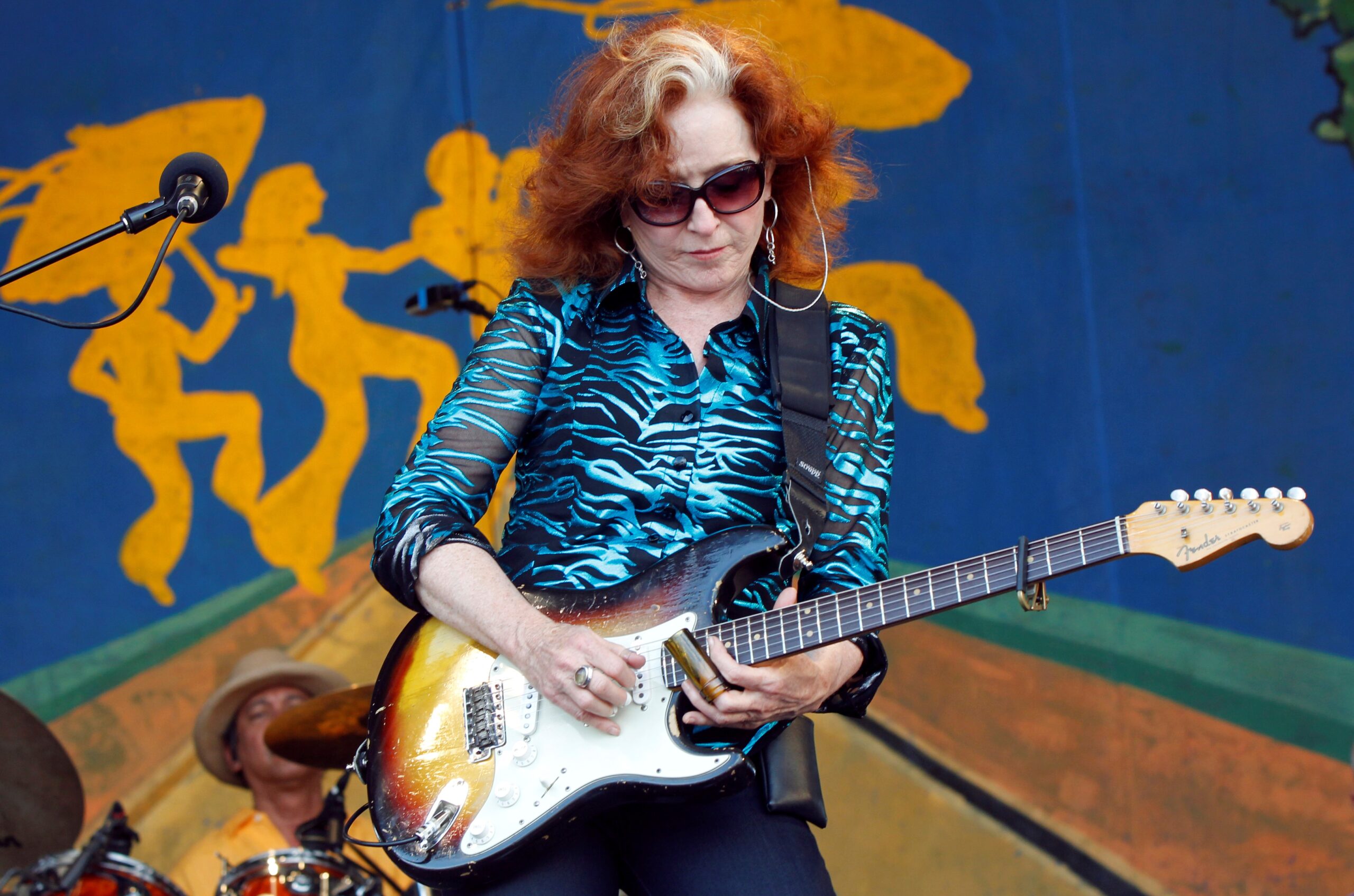
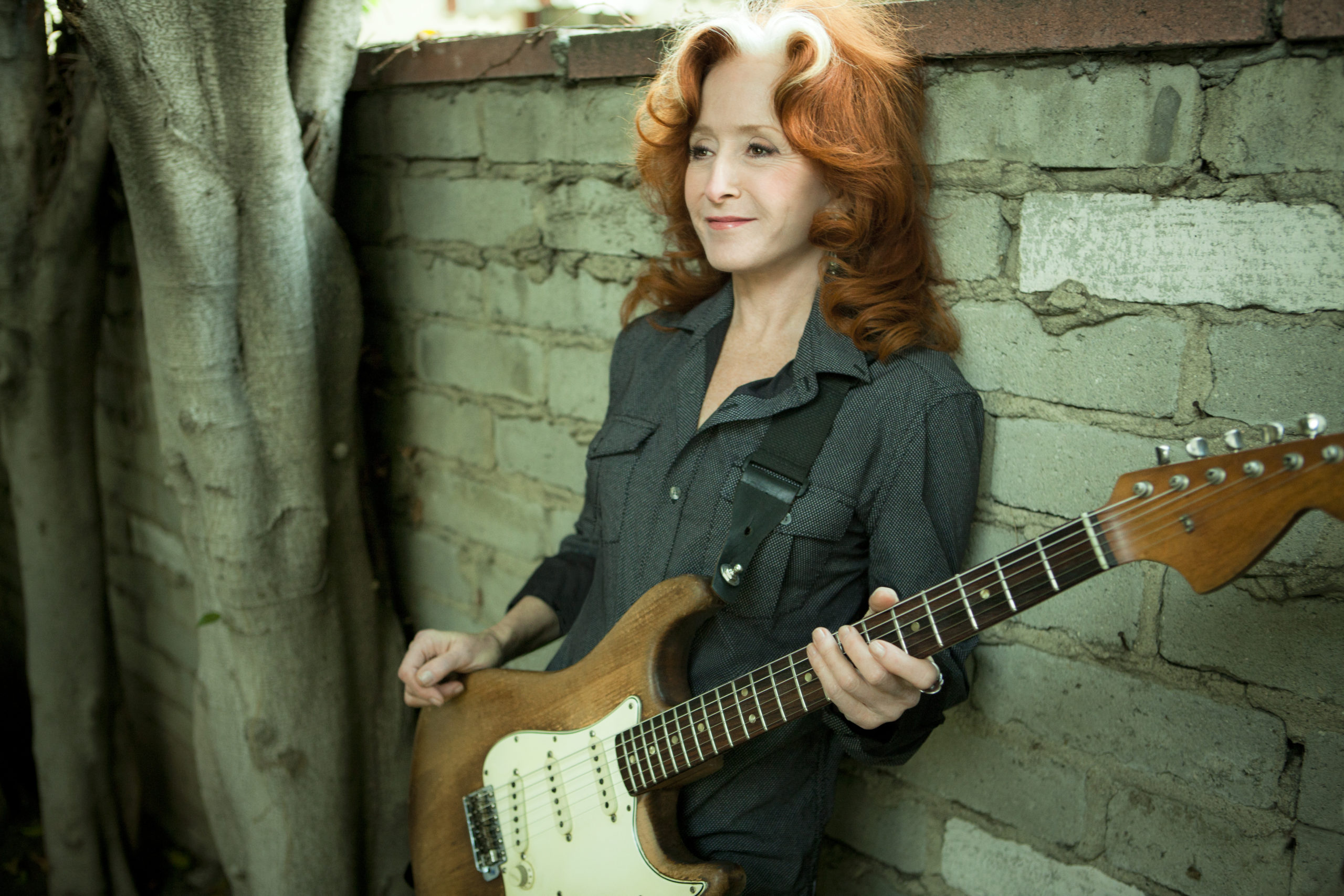
Few musicians have earned the level of respect and admiration that Bonnie Raitt has enjoyed throughout her remarkable career. Known for her distinctive voice, exceptional guitar playing, and decades of award-winning music, Raitt has long been regarded as one of America’s most influential artists.
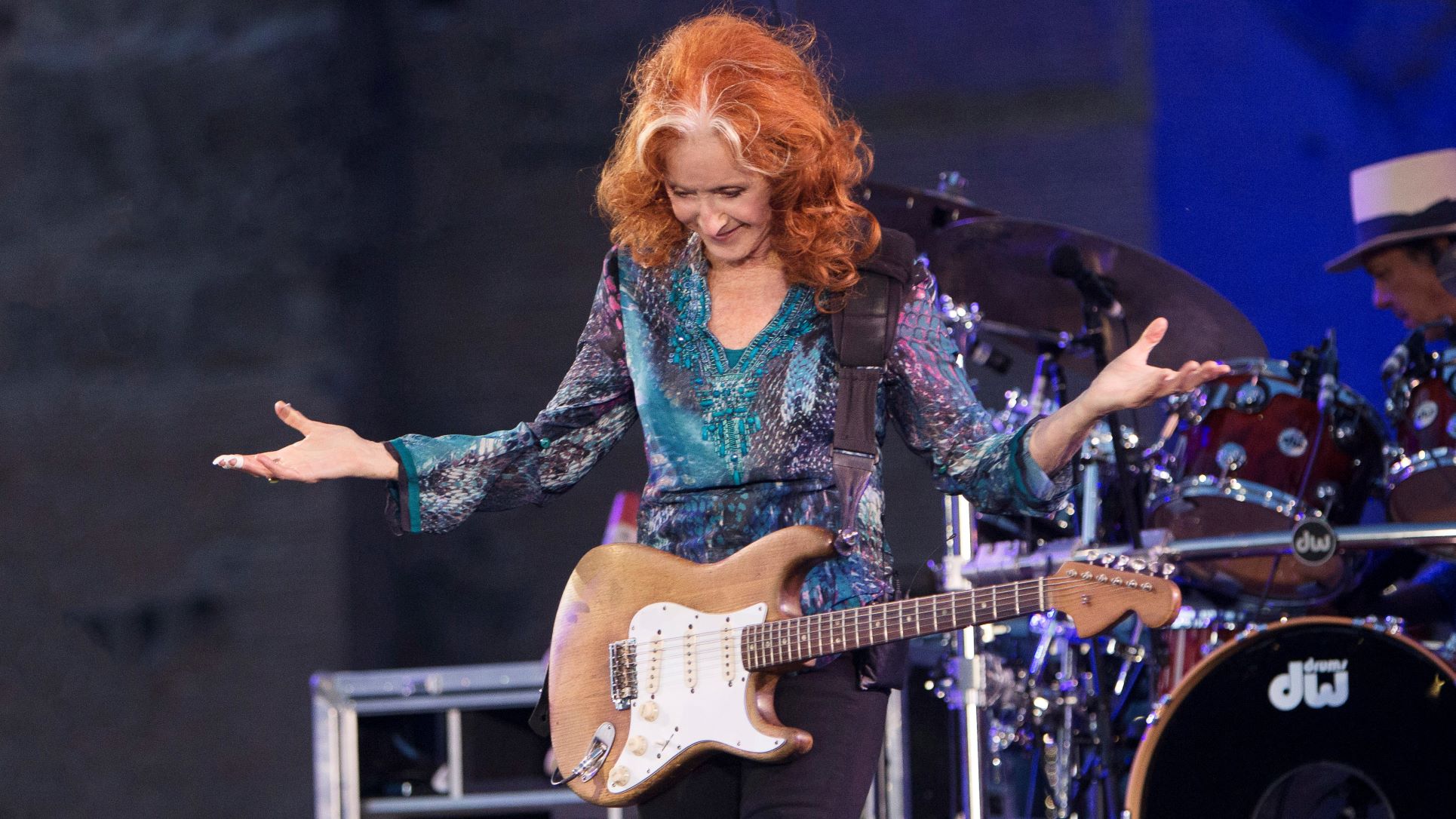
Now, however, the legendary singer-songwriter has found herself at the center of a new national conversation—one that has less to do with music and more to do with politics, public discourse, and the growing cultural divide in the United States.
Recent comments attributed to Raitt criticizing President Donald Trump and expressing concern about political polarization have generated widespread discussion across social media, news platforms, and political circles. As reactions continue to pour in, the debate surrounding her remarks has become another example of the increasingly blurred lines between entertainment, politics, and public influence in modern America.
According to reports, Raitt voiced concerns about what she sees as rising division within the country. She reportedly argued that narratives fueled by fear, anger, and hostility are contributing to a climate that makes constructive dialogue more difficult. Her comments emphasized the importance of unity, understanding, and a willingness to engage across political differences.
Supporters quickly applauded her remarks.
Many fans praised Raitt for speaking openly about issues she believes affect the nation’s future. They argued that artists, like all citizens, have the right to express their opinions on matters of public importance. Some even suggested that public figures have a responsibility to use their platforms to encourage civic engagement and raise awareness about social concerns.
To these supporters, Raitt’s comments were not controversial at all. Instead, they viewed them as thoughtful observations from someone who has spent decades engaging with social issues and advocating for causes she believes in.
Others saw the situation very differently.
Critics argued that celebrities often contribute to political polarization rather than helping to solve it. Some questioned whether entertainers should involve themselves so heavily in political discussions, especially when their influence reaches millions of followers.
For these critics, the concern is not necessarily about Bonnie Raitt personally. Rather, they believe that celebrity involvement in politics can sometimes intensify divisions by turning complex issues into emotional social media battles.
Many conservative commentators and Trump supporters responded by suggesting that entertainers should focus on their artistic careers instead of political commentary. Some argued that constant political messaging from public figures creates fatigue among audiences who simply want to enjoy music, sports, movies, and other forms of entertainment without being drawn into partisan debates.
The disagreement reflects a broader cultural shift that has been taking place in America for years.
In previous generations, celebrities often maintained a clearer separation between their public entertainment careers and their political views. Today, social media has dramatically changed that dynamic.
Artists, actors, athletes, and influencers now communicate directly with audiences around the world. As a result, public figures have greater opportunities than ever to express opinions on political and social issues.
At the same time, audiences have become increasingly divided in how they respond.
Some people welcome political engagement from celebrities, believing that influential voices can help bring attention to important issues. Others feel that fame should not automatically translate into authority on political matters.
Bonnie Raitt’s situation illustrates this tension perfectly.
Throughout her career, she has built a reputation not only as a musician but also as someone willing to support charitable causes and social initiatives. Her advocacy is not new. In fact, public engagement has been part of her identity for decades.
Yet even long-established public positions can generate controversy in today’s political climate.
Social media has accelerated the speed at which comments spread and amplified reactions from every perspective. A statement that might once have remained part of a single interview can now become the subject of nationwide debate within hours.
As clips, headlines, and opinion pieces circulate online, discussions often become less about the original comments and more about the broader political narratives surrounding them.
This environment creates challenges not only for public figures but also for audiences trying to interpret what they hear and read.
Supporters of Raitt argue that criticism directed toward her reflects a growing intolerance for differing opinions. They maintain that free expression should apply equally to artists regardless of their political views.
Critics counter that public figures should recognize the influence they possess and exercise caution when entering highly polarized debates.
Both sides believe they are defending important principles.
One side emphasizes freedom of expression and civic participation.
The other emphasizes the need for unity and concern about celebrity influence in political discourse.
The reality may be more complicated than either perspective suggests.
Artists have historically played significant roles in shaping cultural conversations. From folk music and protest songs to modern social activism, musicians have often reflected the hopes, frustrations, and concerns of their times.
At the same time, audiences have always retained the right to disagree with those artists.
The relationship between creators and audiences has never been entirely free from tension.
What makes today’s environment unique is the speed, scale, and intensity with which those disagreements unfold.
A single interview can become national news.
A brief comment can dominate social media feeds for days.
A musician’s personal opinion can generate headlines far beyond the entertainment industry.
Bonnie Raitt’s recent controversy is merely the latest example of this phenomenon.
Whether one agrees with her comments or disagrees with them, the discussion highlights a larger question facing modern society: What role should public figures play in political and cultural conversations?
Should artists limit themselves to entertainment?
Or should they use their visibility to speak openly about issues they believe matter?
There is no universal answer.
Some Americans believe celebrity activism is an important part of democratic participation.
Others believe it contributes to division and distracts from the artistic work that made those individuals famous in the first place.
What is clear is that these debates are unlikely to disappear anytime soon.
As technology continues to connect public figures directly with audiences, conversations about politics, culture, influence, and free expression will remain central to public life.
For now, Bonnie Raitt’s remarks have become another flashpoint in that ongoing discussion—a reminder that in today’s America, the worlds of music, politics, and social media are often impossible to separate.
And as reactions continue to spread online, one thing remains certain: the conversation surrounding celebrity influence, political speech, and national unity is far from over.
💬 What do you think? Should musicians and entertainers use their platforms to speak about political issues, or should their focus remain primarily on their art?