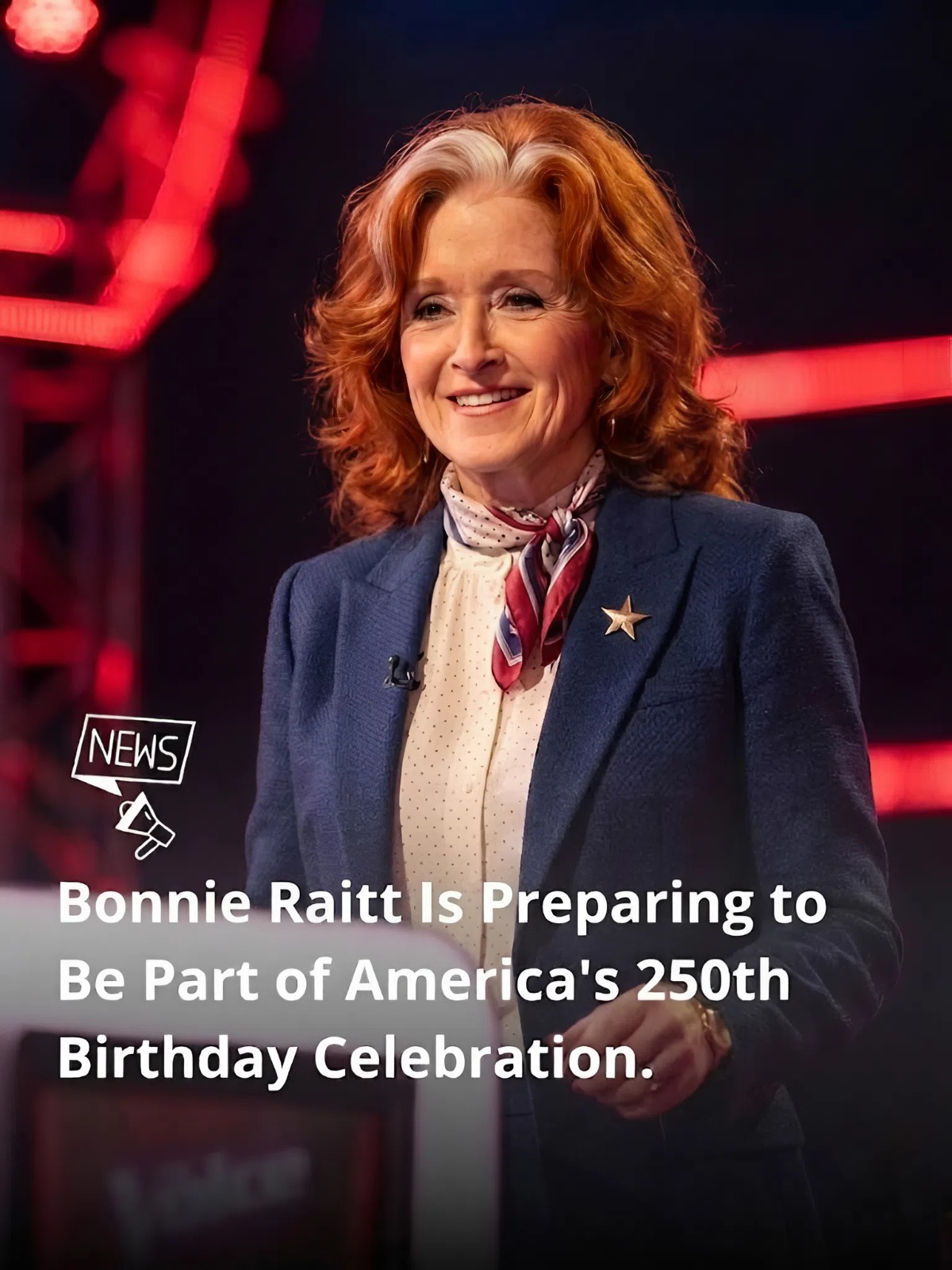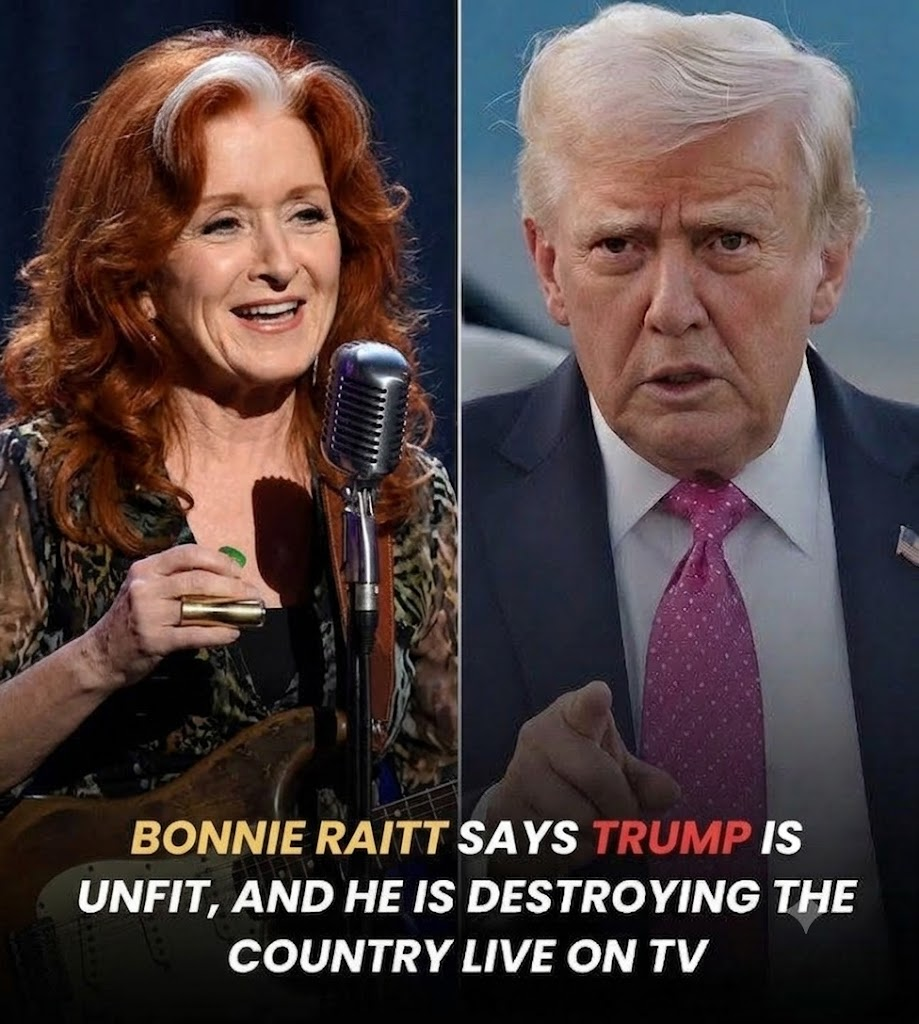
Bonnie Raitt Sparks National Debate After Criticizing Donald Trump During Public Appearance
Few artists in American music command the respect and admiration that Bonnie Raitt has earned over the course of her remarkable career. Known for her unmistakable voice, masterful guitar playing, and decades of advocacy for social causes, Raitt has long been more than just a musician. She has become a cultural figure whose opinions often resonate far beyond the concert stage.
Now, the Grammy-winning icon finds herself at the center of a growing national conversation after publicly criticizing former President Donald Trump during a recent appearance. Her comments quickly spread across social media, news outlets, and political circles, igniting passionate reactions from supporters and critics alike.
According to those in attendance, Raitt expressed concern about what she sees as the direction of American politics and the challenges facing the country. She argued that leadership decisions made over recent years have left many Americans confronting circumstances they never imagined they would face.

While her remarks were brief, their impact was immediate.
Within hours, clips and quotes from her appearance began circulating online. Fans praised her willingness to speak openly about issues she believes affect the nation, while opponents questioned whether entertainers should use their platforms to engage in political discussions.
The resulting debate once again highlighted a question that has become increasingly common in modern America: What role should celebrities play in shaping public discourse?
For many supporters, the answer is simple.
Artists, musicians, actors, and public figures are citizens just like everyone else. They vote, pay taxes, raise families, and experience the consequences of political decisions. From this perspective, expecting entertainers to remain silent simply because they are famous seems unfair.
Many of Raitt’s supporters pointed out that she has spent much of her career advocating for causes she believes in. They argue that speaking out on political issues is consistent with the values she has expressed throughout her life.
To them, her latest comments represent an extension of a long-standing commitment to civic engagement rather than a sudden attempt to attract attention.
Others, however, see the situation differently.
Critics argue that celebrities often wield enormous influence over millions of followers and fans. Because of that influence, they believe public figures should exercise caution when discussing political matters.
Some contend that celebrity commentary can contribute to deeper divisions in an already polarized society. They worry that political statements from entertainers may encourage people to view issues through the lens of fandom rather than thoughtful debate.
As a result, reactions to Raitt’s remarks have been sharply divided.
Social media platforms quickly became battlegrounds for competing viewpoints. Supporters celebrated her courage and praised her for speaking her mind. Critics accused her of injecting politics into spaces that should remain focused on music and entertainment.
The intensity of the response demonstrates just how emotionally charged political discussions have become in the United States.
Yet for Bonnie Raitt, public engagement is hardly new territory.
Throughout her career, she has consistently used her platform to support causes ranging from environmental protection and social justice to voting rights and community activism. Unlike some celebrities who avoid controversial topics, Raitt has often been willing to express her opinions even when doing so risked criticism.
That willingness has earned her both admiration and controversy over the years.
What makes this latest episode particularly significant is the stature Bonnie Raitt holds within American culture.
Unlike younger artists who may be associated with specific political demographics, Raitt’s audience spans multiple generations. Her fans include people from a wide range of political, geographic, and cultural backgrounds.
For more than fifty years, she has built a reputation based on authenticity and artistic integrity.
Because of that reputation, many observers believe her words carry a unique weight.
Even individuals who disagree with her views often acknowledge her long history of sincerity and commitment to the issues she supports.
The broader controversy also reflects a larger trend occurring throughout American society.
Increasingly, public figures from every corner of entertainment are speaking out on political matters. Musicians, actors, athletes, and influencers frequently find themselves involved in discussions about elections, policy, leadership, and social issues.
For some Americans, this represents healthy democratic participation.
For others, it contributes to an environment where politics seems impossible to escape.
The debate surrounding Bonnie Raitt’s comments therefore extends far beyond any single statement she made.
At its core, the conversation touches on fundamental questions about free expression, civic responsibility, and the relationship between culture and politics.
Should influential artists use their platforms to advocate for change?
Do celebrities have a responsibility to speak when they believe important issues are at stake?
Or should public figures focus exclusively on their professional work and leave political debates to elected officials and policy experts?
There are no easy answers.
What is clear, however, is that Americans remain deeply engaged in these discussions.
As the nation continues to grapple with questions about leadership, governance, economic challenges, and social change, voices from across society are likely to remain part of the conversation.
Bonnie Raitt’s recent remarks are simply the latest example of how quickly a single public statement can become part of a much larger national debate.
Whether one agrees with her views or strongly disagrees, the response demonstrates the enduring influence she possesses after decades in the spotlight.

Few artists maintain that level of cultural relevance for so long.
Fewer still manage to inspire discussion not only about music but about the future direction of the country itself.
As reactions continue to unfold, one thing appears certain: Bonnie Raitt’s comments have struck a nerve within an already passionate national conversation.
Supporters see a respected artist exercising her right to speak openly about issues she cares about.
Critics see another example of celebrity politics contributing to division.
Between those perspectives lies a broader discussion about democracy, influence, and the role public figures play in shaping public opinion.
And in today’s America, that discussion shows no sign of slowing down anytime soon.