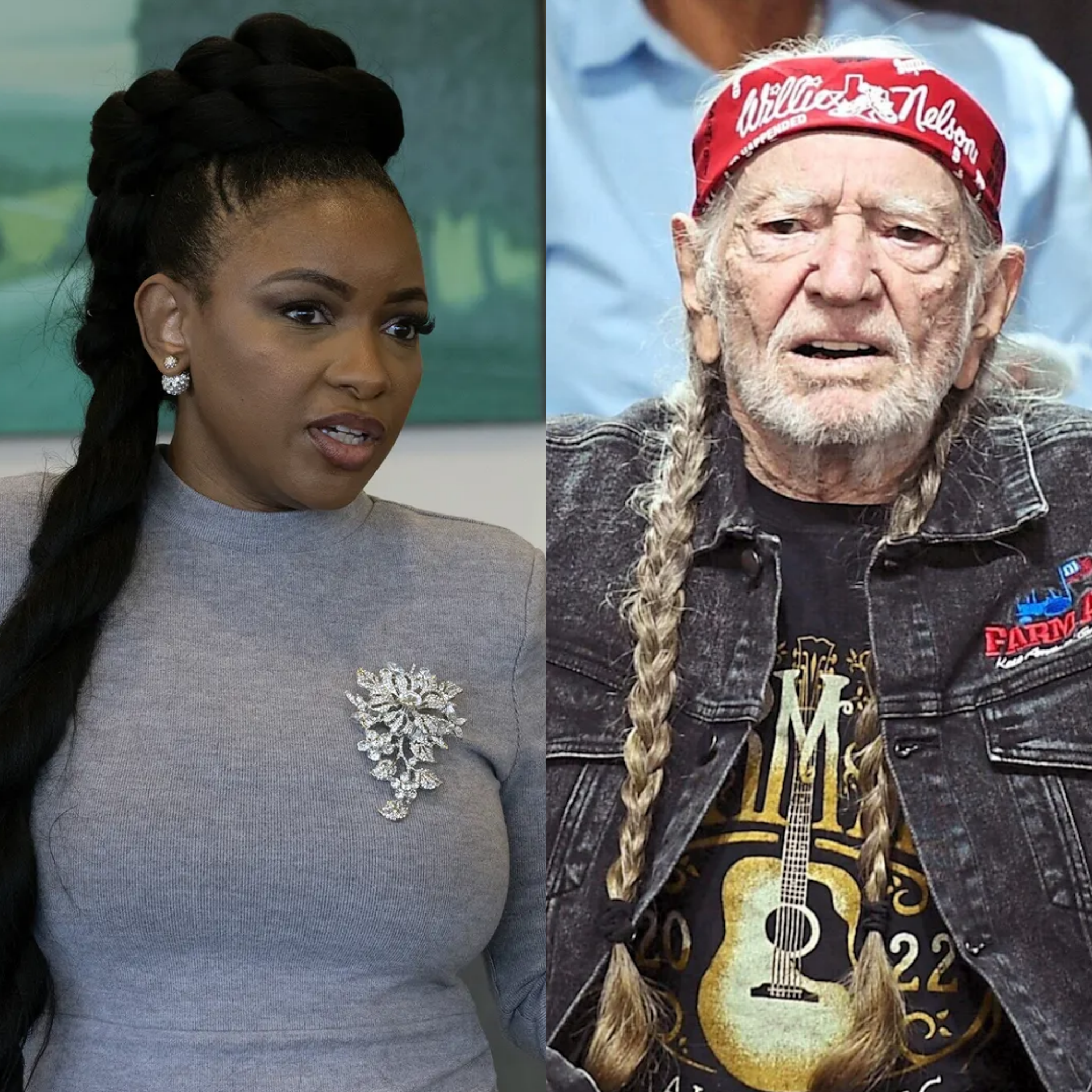
In a media age defined by outrage cycles, viral soundbites, and cultural flashpoints, it doesn’t take much for a single moment on live television to ignite a national debate. Imagine, then, a scenario where a casual on-air discussion about national charities unexpectedly turns into a symbolic confrontation between politics and American music royalty — with Willie Nelson at the center of it all.
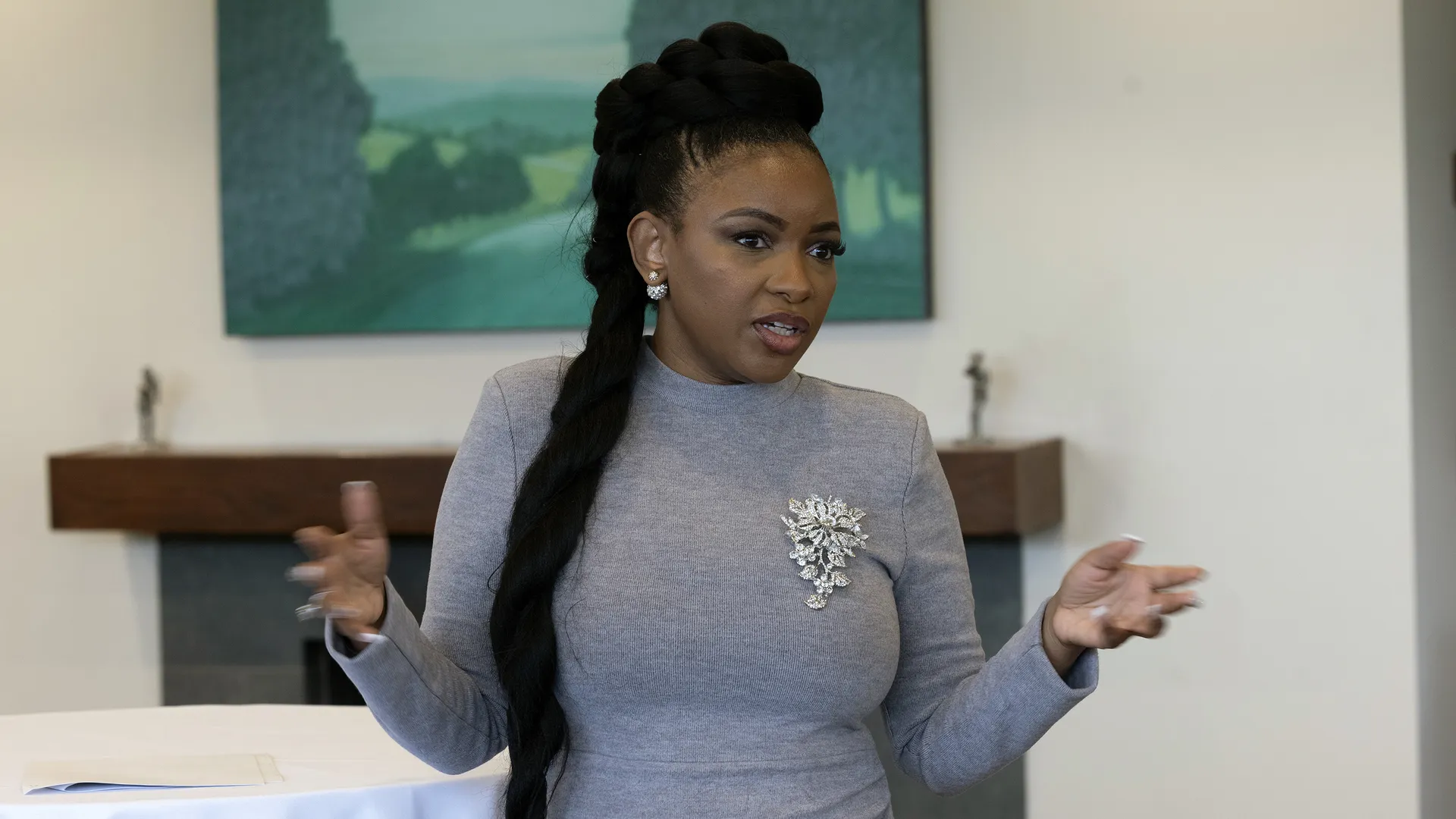
What begins as a lighthearted televised segment quickly veers off course when a sharp remark cuts through the studio air. In this hypothetical scenario, a public figure dismisses Willie Nelson as “an aging outlaw clinging to relevance under the flag of patriotism.” The words land hard. The cameras keep rolling. The audience waits for a reaction.
But the reaction never comes — at least not in the way anyone expects.
Willie Nelson doesn’t raise his voice.
He doesn’t argue.
He doesn’t trade insults.
Instead, he responds with the kind of quiet gravity that only decades of lived history can produce. A few measured sentences. No anger. No theatrics. Just a reminder of who he is, what he has stood for, and the millions of Americans whose lives his music has touched.
The studio, in this imagined moment, goes completely silent.
The Power of Restraint in a Loud World
In today’s media environment, outrage is currency. The loudest voice often wins the clip, the headline, and the algorithm. That’s what makes Willie Nelson such a compelling figure in any hypothetical cultural clash: he represents the opposite instinct.
For over six decades, Willie Nelson has embodied a version of American individualism that doesn’t shout. From anti-war anthems to farm aid activism, from outlaw country to bipartisan humanitarian causes, his legacy isn’t built on provocation — it’s built on persistence.
So when confronted with disrespect in this imagined scenario, his restraint becomes the message.
Viewers don’t remember what was said about him nearly as much as how he responded.
Or rather, how little he needed to.
When Culture Becomes the Courtroom
Days later — in this fictional narrative — the story takes a dramatic turn. News breaks that Willie Nelson’s legal team has filed an $80 million civil lawsuit alleging defamation and emotional distress against both the broadcaster and the individual who made the remark.
Suddenly, the conversation shifts.
This is no longer about one comment on live television. It’s about where criticism ends and character assassination begins. It’s about whether cultural icons, especially older ones, are fair game for dismissive rhetoric simply because they no longer fit a modern political narrative.

More importantly, it raises a deeper question:
Who gets to define patriotism in America?
Willie Nelson as a Symbol, Not Just a Musician
To understand why such a fictional lawsuit would resonate so deeply, you have to understand what Willie Nelson represents.
He is not just a country singer.
He is not just an “outlaw.”
Willie Nelson is woven into the fabric of American culture. His work spans generations, political divides, and social movements. He has advocated for farmers, veterans, civil liberties, and creative freedom long before such causes were fashionable or profitable.
For many Americans, criticizing Willie Nelson doesn’t feel like critiquing a celebrity — it feels like dismissing a piece of shared national memory.
That’s why, in this imagined scenario, public reaction is swift and intense.
A Nation Reacts
Social media erupts.
Fans flood comment sections with lyrics, old concert footage, and personal stories of how Willie’s music helped them through war, loss, addiction, and economic hardship. Hashtags trend not because of outrage, but because of loyalty.
“This isn’t about politics,” one viral comment reads.
“It’s about respect.”
Others point out the irony: a man who spent his life challenging power structures is now being mocked from a position of institutional authority.
In this hypothetical moment, Willie Nelson becomes more than a defendant or a plaintiff. He becomes a cultural mirror — reflecting how America treats its elders, its artists, and its dissenters.
Legacy Versus Relevance
At the heart of this fictional controversy lies a familiar accusation: irrelevance.
The idea that age diminishes value.
That cultural impact has an expiration date.
That legacy can be erased by a clever insult.
But Willie Nelson’s enduring presence challenges that notion. His continued relevance doesn’t come from chasing trends; it comes from standing still while the world catches up.
In this imagined lawsuit, the monetary figure — $80 million — isn’t really the point. The point is the statement: some legacies are not disposable.
Why This Hypothetical Story Resonates
Even as fiction, this scenario feels plausible because it taps into real tensions:
-
The clash between political rhetoric and cultural heritage
-
The marginalization of older voices in modern discourse
-
The weaponization of media platforms for cheap dismissal
-
The public hunger for dignity over drama
People aren’t just reacting to a story about Willie Nelson. They’re reacting to the idea that silence, restraint, and self-respect can still be powerful weapons in a noisy age.
The Final Note
In the closing act of this hypothetical saga, there is no triumphant press conference. No viral rant. No victory lap.
Just Willie Nelson, doing what he has always done — letting time, truth, and history speak louder than any insult ever could.
And in that sense, whether in fiction or reality, the message lands just as clearly:
Some legends don’t need to defend themselves.
They simply outlast the noise.