
Bruce Springsteen has never been a stranger to difficult truths. But with his latest release, the legendary songwriter appears to have crossed a new threshold—one that has transformed a single song into a moment of national reflection.
Premiered with little advance notice, Springsteen’s self-written track “Voices from the Past” amassed more than 60 million views within hours, sending shockwaves across the music world and far beyond it. The reaction was immediate, intense, and unusually emotional, signaling that this was not simply another entry in the catalog of one of America’s most celebrated artists.
A Song Born From Confrontation, Not Promotion
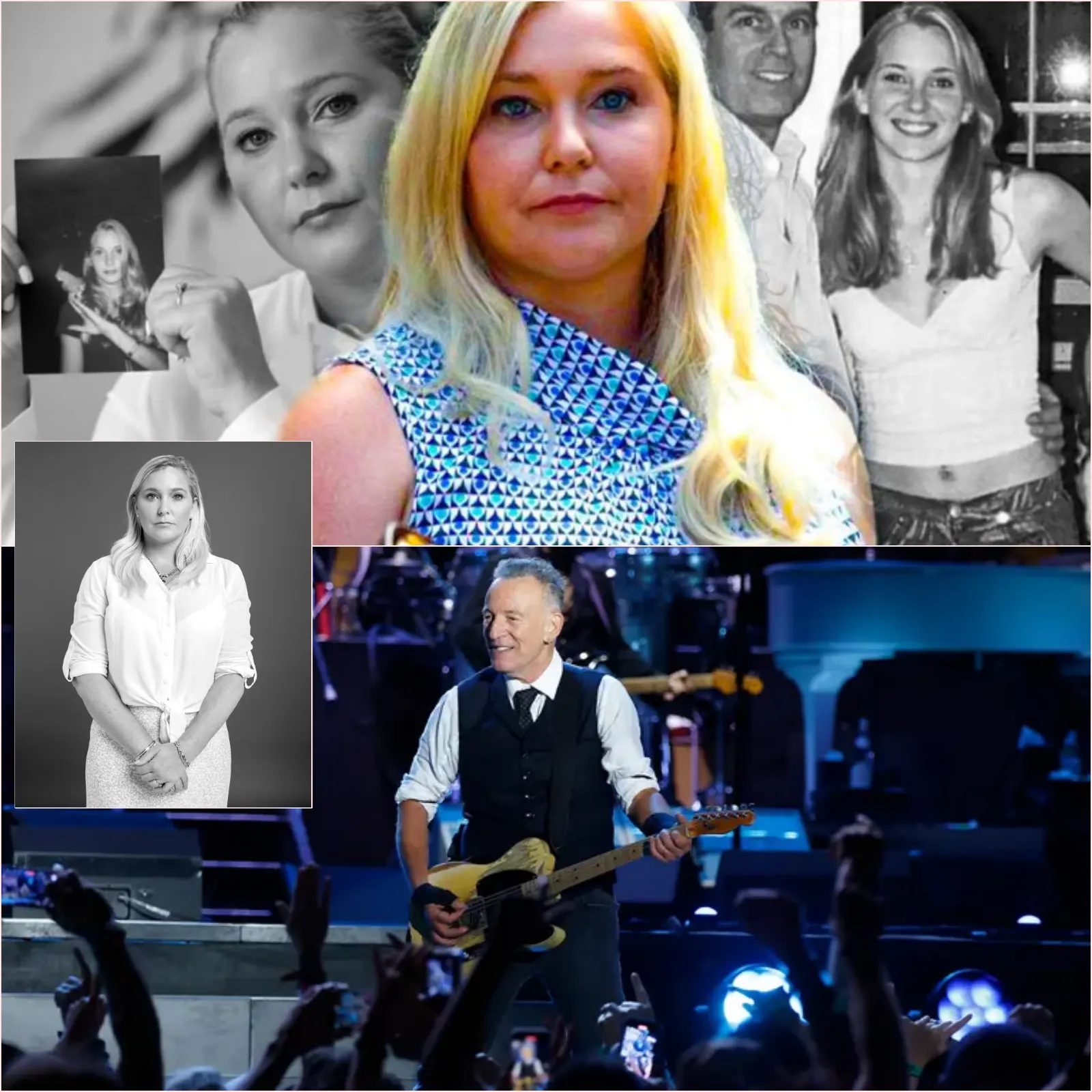
According to people close to the project, “Voices from the Past” was completed just hours after Springsteen finished reading Virginia Giuffre’s memoir, a book that has been widely described as disturbing, painful, and impossible to dismiss. Those familiar with Springsteen’s process say the timing was not coincidental.
What followed was not a calculated publicity move. There was no elaborate marketing campaign, no staged controversy. Instead, Springsteen reportedly retreated into his writing space and emerged with a song that felt urgent—almost unavoidable.
At 75, Springsteen has little left to prove commercially. His decision to release such a stark, challenging song appears rooted not in ambition, but in responsibility.
“Voices from the Past”: A Song That Refuses Comfort
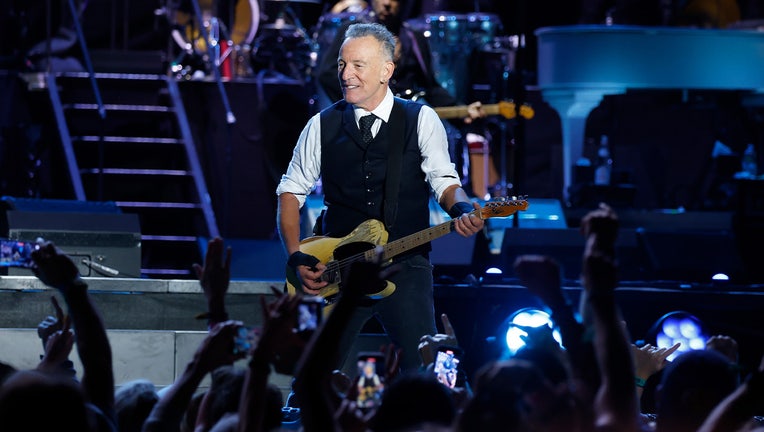
Musically sparse and emotionally restrained, “Voices from the Past” strips away the anthemic grandeur often associated with Springsteen’s biggest hits. There are no stadium-ready choruses here. Instead, the song unfolds slowly, built around restrained instrumentation and lyrics that read more like testimony than metaphor.
The song addresses power, silence, and historical amnesia—the mechanisms through which uncomfortable truths are ignored, buried, or reframed. Springsteen never names specific individuals or institutions, but the targets are unmistakable.
Critics have described the song as “quietly devastating,” noting that its power lies not in accusation, but in insistence. It asks listeners to sit with discomfort rather than escape it.
A Livestream That Changed the Conversation
The cultural impact of the song deepened during a 17-minute livestream in which Springsteen addressed its origins directly. Appearing without spectacle or performance, he spoke plainly, choosing his words carefully.
He described the memoir that inspired the song as
“a story people tried to move past without really listening.”
Springsteen emphasized that some forms of pain do not fade with time. Instead, they are passed down, rewritten, and normalized, becoming part of the background noise of society until someone forces them back into focus.
“We like to call it history,” he said. “But history doesn’t stay in the past if it’s never dealt with.”
An Album Without Filters

The most surprising revelation came toward the end of the livestream.
Springsteen announced plans for a full album inspired by themes of survival, accountability, and the long shadow of power. Unlike many late-career projects, this album will not be shaped by commercial expectations or label oversight.
Springsteen confirmed that he intends to produce the album independently, maintaining complete creative control and rejecting any pressure to soften its message.
“Some things don’t need polishing,” he said.
“They need to be heard.”
While no release date has been announced, the commitment itself signaled a rare level of artistic resolve—even by Springsteen’s standards.
The Internet Reacts—and Divides
Public reaction was swift and polarized.
Within minutes of the livestream’s conclusion, hashtags such as #SpringsteenForTruth, #VoicesFromThePast, and #ListenToSurvivors trended globally. Supporters praised Springsteen for using his platform to confront silence and power, calling the song “a moral statement disguised as music.”
Critics, however, accused the artist of politicizing art or reopening wounds better left alone. Others questioned whether musicians should involve themselves so directly in such sensitive cultural conversations.
Yet even detractors acknowledged the song’s impact. “Voices from the Past” has sparked sustained dialogue—something increasingly rare in an era of fleeting viral moments.
Springsteen’s Longstanding Role as America’s Witness
In many ways, “Voices from the Past” feels like a continuation of Springsteen’s lifelong role as a witness to American life. From factory workers to war veterans, from small towns to forgotten highways, his songs have consistently centered those pushed to the margins.
What distinguishes this moment is its directness. Rather than chronicling the consequences of silence, Springsteen confronts silence itself—asking who benefits from it, and who pays the price.
When Music Refuses to Look Away
Springsteen closed the livestream with a line that has since been shared millions of times:
“Some truths get lost in the noise…
so I’m going to sing them.”
In a cultural landscape where many artists choose safety over substance, Bruce Springsteen has chosen confrontation over comfort. “Voices from the Past” may not offer solutions, but it demands attention—and insists that some stories are too important to be left unheard.
For an artist whose career has spanned more than five decades, that insistence may be his most powerful statement yet.